Story
Stroke Assessment in Nursing: Early Warning Signs and Priority Interventions
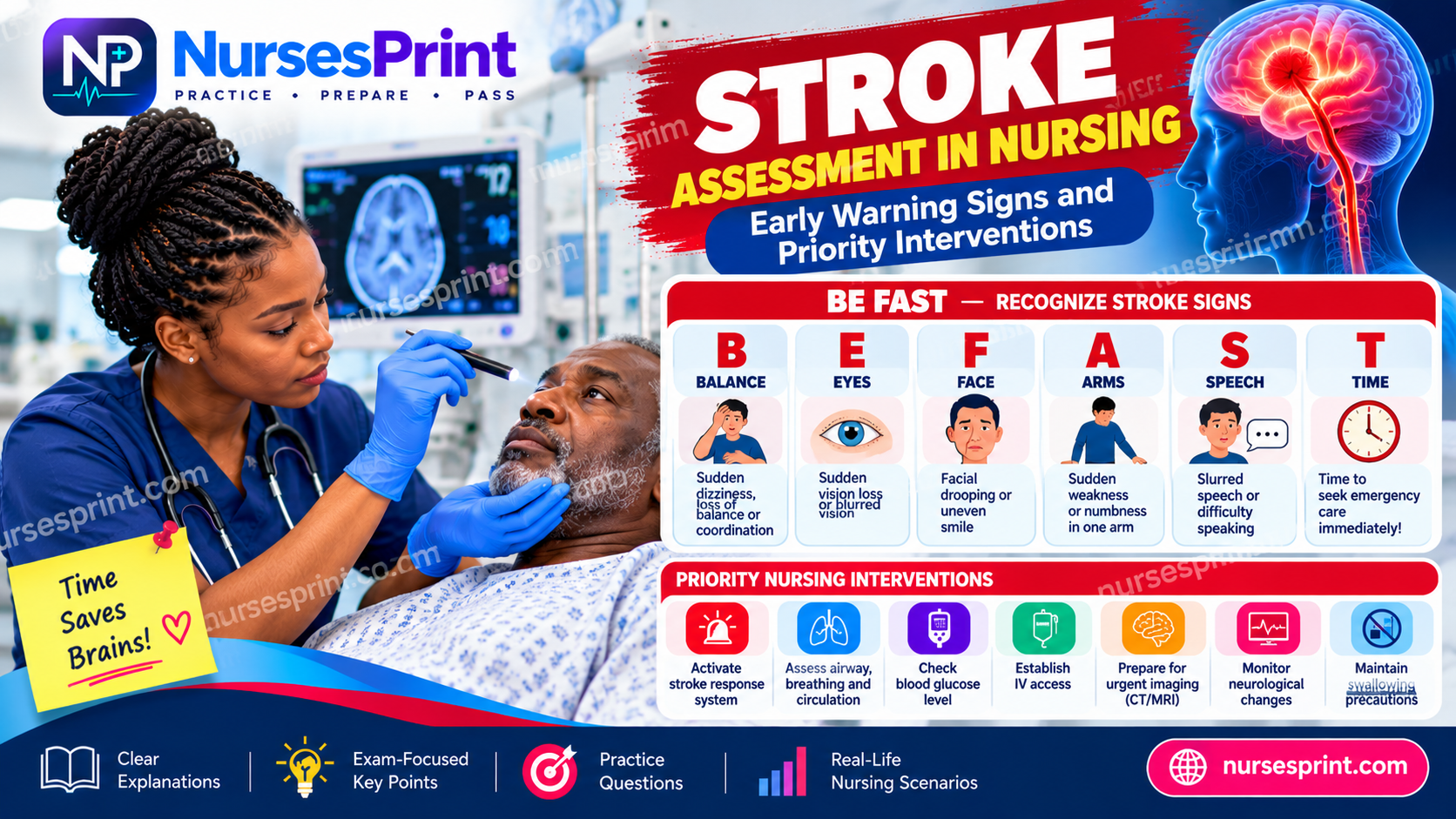
Stroke assessment in nursing is a critical clinical skill that helps healthcare professionals recognize neurological emergencies and initiate lifesaving interventions.
A stroke occurs when blood flow to part of the brain becomes blocked or when a blood vessel in the brain ruptures. Without adequate oxygen, brain cells can become damaged within minutes.
Nurses play an essential role in identifying stroke symptoms, assessing neurological function and coordinating emergency care.
Understanding stroke recognition also helps nursing students strengthen clinical judgment and prepare for professional examinations.
What Are the Main Types of Stroke?
There are two major types of stroke.
Ischemic Stroke: Occurs when a blood clot or another obstruction blocks blood flow to part of the brain.
Hemorrhagic Stroke: Occurs when a blood vessel ruptures and causes bleeding within or around the brain.
A transient ischemic attack (TIA) produces temporary neurological symptoms caused by reduced blood flow. Although symptoms resolve, a TIA requires urgent medical evaluation because it can indicate an increased risk of future stroke.
According to the American Stroke Association, recognizing stroke symptoms quickly is essential for obtaining timely treatment.
1. Recognize Stroke Warning Signs Using BE FAST
The BE FAST approach helps nurses identify common stroke symptoms.
B — Balance: Sudden dizziness, loss of coordination or difficulty walking.
E — Eyes: Sudden vision loss, double vision or other unexpected visual changes.
F — Face: Facial drooping or an uneven smile.
A — Arms: Sudden weakness or numbness affecting one arm.
S — Speech: Slurred speech, difficulty speaking or trouble understanding language.
T — Time: Activate emergency stroke services immediately.
Other symptoms may include sudden severe headache, confusion or weakness affecting one side of the body.
Nursing Tip: Stroke symptoms can develop suddenly. Never delay emergency assessment while waiting to see whether symptoms improve.
2. Perform a Focused Neurological Assessment
Nurses should rapidly assess airway, breathing and circulation while evaluating neurological function.
Important assessment priorities include:
Level of consciousness
Pupil size and reaction
Facial symmetry
Upper and lower limb strength
Speech and language ability
Blood pressure and heart rate
Oxygen saturation
Blood glucose level
Checking blood glucose is essential because hypoglycemia can produce symptoms resembling stroke.
Nurses should also determine when the patient was last known to be at their neurological baseline.
This information helps the stroke team assess treatment eligibility.
3. Understand Priority Nursing Interventions
When stroke is suspected, immediate action is necessary.
Priority interventions include:
Activate the stroke response system: Notify the appropriate emergency team without delay.
Support airway and breathing: Assess respiratory function and provide oxygen when clinically indicated.
Check blood glucose: Identify and address possible hypoglycemia.
Establish intravenous access: Prepare for prescribed emergency treatment.
Facilitate urgent brain imaging: Support rapid CT or other appropriate imaging to distinguish stroke types.
Monitor neurological changes: Reassess consciousness, motor function and vital signs.
Maintain swallowing precautions: Keep the patient from eating, drinking or taking oral medications until swallowing safety has been assessed.
Treatment depends on stroke type, symptom onset and individual clinical findings.
4. Understand Emergency Stroke Treatment
Eligible patients with acute ischemic stroke may receive intravenous thrombolytic treatment.
Some patients with large-vessel occlusion may qualify for mechanical thrombectomy.
However, these treatments require careful assessment of eligibility and potential risks.
Hemorrhagic stroke requires different management, including measures to control bleeding and prevent further neurological injury.
The American Heart Association's stroke guidelines provide evidence-based recommendations for stroke evaluation and management.
Important: Nurses should never assume that all suspected stroke patients require the same medication or intervention.
5. Practice Stroke Nursing Examination Questions
Practice Question:
A nurse notices that a hospitalized patient suddenly develops facial drooping, slurred speech and weakness in the right arm. What is the priority action?
A. Encourage the patient to rest.
B. Offer oral fluids.
C. Activate the emergency stroke response system.
D. Document the symptoms and reassess later.
Correct Answer: C
Rationale: Sudden neurological deficits suggest an acute stroke. Immediate activation of the stroke response system allows rapid assessment, brain imaging and evaluation for time-sensitive treatment.
Explore additional nursing examination preparation resources at NursesPrint to strengthen your clinical decision-making skills.
Frequently Asked Questions
What is the first priority when stroke is suspected?
Activate emergency stroke services while immediately assessing airway, breathing, circulation and neurological status.
Why is blood glucose checked during stroke assessment?
Hypoglycemia can mimic stroke symptoms and requires prompt identification.
Why is the last-known-well time important?
It helps determine whether a patient may qualify for time-sensitive stroke treatments.
Conclusion
Stroke assessment requires rapid recognition, systematic neurological evaluation and immediate emergency intervention.
Nurses play a vital role in identifying warning signs, communicating clinical findings and supporting timely treatment.
Developing these skills improves patient safety and strengthens nursing examination performance.
Prepare for neurological nursing questions with confidence. Visit NursesPrint for nursing study resources and practice materials designed to support professional examination preparation.