Story
Sepsis in Nursing: Early Warning Signs, Assessment and Priority Interventions
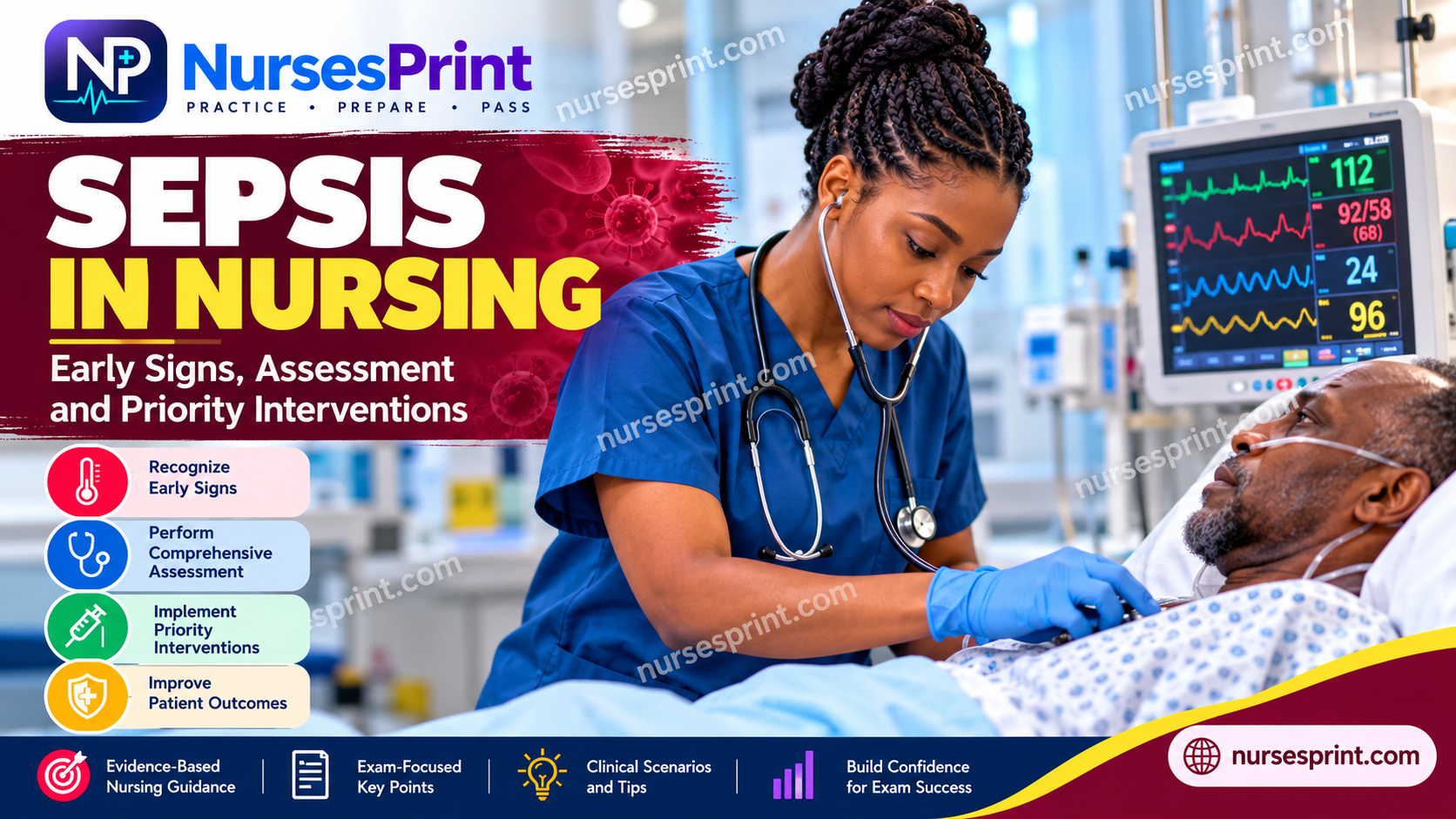
Sepsis in nursing is a critical topic because early recognition can mean the difference between recovery and life-threatening complications. Nurses are often the first healthcare professionals to identify subtle changes in a patient's condition.
Recognizing the warning signs of sepsis and responding quickly can improve patient safety while reducing the risk of organ dysfunction.
For nursing students preparing for examinations, understanding sepsis assessment and priority nursing interventions is essential for developing strong clinical judgment.
What Is Sepsis?
Sepsis is a life-threatening condition that occurs when the body's response to infection becomes dysregulated and causes organ dysfunction.
It may develop from infections affecting the lungs, urinary tract, skin or gastrointestinal system.
Without timely treatment, sepsis can progress to septic shock and multiple organ failure.
According to the Centers for Disease Control and Prevention, sepsis is a medical emergency requiring rapid recognition and treatment.
1. Recognize the Early Signs of Sepsis
Early identification begins with careful observation of changes in a patient's condition.
Common warning signs include:
Fever or abnormally low body temperature
Increased heart rate
Rapid breathing or shortness of breath
New confusion or altered mental status
Low blood pressure
Clammy or sweaty skin
Extreme weakness or discomfort
Not every patient develops all these symptoms.
Older adults and immunocompromised patients may present with subtle changes rather than obvious fever.
Nursing Tip: New confusion in a patient with a suspected infection requires immediate assessment because it may indicate developing organ dysfunction.
2. Perform a Comprehensive Nursing Assessment
Nursing assessment plays a central role in identifying clinical deterioration.
Important assessment priorities include monitoring temperature, blood pressure, respiratory rate, heart rate and oxygen saturation.
Nurses should also evaluate mental status, skin perfusion and urine output.
Reduced urine output may indicate impaired kidney perfusion.
Laboratory investigations may include serum lactate measurements, blood cultures, complete blood counts and tests of organ function.
The CDC's clinical guidance for healthcare professionals emphasizes immediate evaluation and frequent reassessment when sepsis is suspected.
3. Understand Priority Nursing Interventions
When sepsis is suspected, nurses must act promptly according to established clinical protocols.
Priority interventions include:
Escalate immediately: Notify the responsible healthcare provider or activate the rapid response system when indicated.
Assess airway and breathing: Evaluate respiratory status and administer oxygen when clinically indicated.
Support circulation: Establish intravenous access and administer prescribed fluids while monitoring the patient's response.
Facilitate investigations: Obtain ordered blood cultures and laboratory samples without unnecessarily delaying treatment.
Support timely antibiotics: Administer prescribed antimicrobial therapy promptly.
Monitor continuously: Reassess vital signs, mental status, urine output and signs of deterioration.
Fluid administration requires careful assessment, particularly in patients at risk of fluid overload.
Nursing interventions should always follow current clinical guidelines and institutional policies.
4. Understand Sepsis Versus Septic Shock
Sepsis involves life-threatening organ dysfunction caused by a dysregulated response to infection.
Septic shock represents a more severe condition involving profound circulatory and metabolic abnormalities.
Clinically, septic shock is identified by a requirement for vasopressors to maintain adequate mean arterial pressure and elevated lactate despite appropriate fluid resuscitation.
Patients experiencing septic shock require urgent critical care management.
Understanding this distinction helps nursing students recognize worsening patient conditions.
5. Prepare for Sepsis Questions in Nursing Exams
Nursing examinations frequently present scenarios involving patients with suspected infections and deteriorating vital signs.
Consider this example:
Question: A hospitalized patient with pneumonia develops new confusion, rapid breathing and low blood pressure. What should the nurse do first?
Correct Answer: Immediately assess the patient and activate the appropriate escalation or rapid response process.
Rationale: These findings suggest possible sepsis with organ dysfunction. Rapid assessment and escalation are necessary to prevent further deterioration.
Practicing clinical scenarios helps nursing students recognize priority actions rather than simply memorizing symptoms.
Explore the NursesPrint nursing practice question library to strengthen your knowledge of medical-surgical nursing and patient safety.
Frequently Asked Questions
What is the earliest sign of sepsis?
There is no single earliest sign. Changes in respiratory rate, heart rate, temperature or mental status may provide important warning signals.
What is the nurse's priority when sepsis is suspected?
The priority is immediate patient assessment and escalation of care while supporting airway, breathing and circulation.
Can sepsis occur without fever?
Yes. Some patients develop sepsis without fever and may even experience abnormally low body temperatures.
Conclusion
Early recognition of sepsis is an essential nursing skill that supports timely intervention and improved patient outcomes.
By identifying warning signs, performing comprehensive assessments and responding promptly to deterioration, nurses play a critical role in preventing serious complications.
Strengthen your clinical reasoning through regular practice and targeted study.
Prepare with confidence: Visit NursesPrint for nursing examination preparation resources, practice questions and detailed explanations designed to support your learning.