Story
Pulmonary Embolism Nursing Care: Early Warning Signs, Assessment and Emergency Interventions
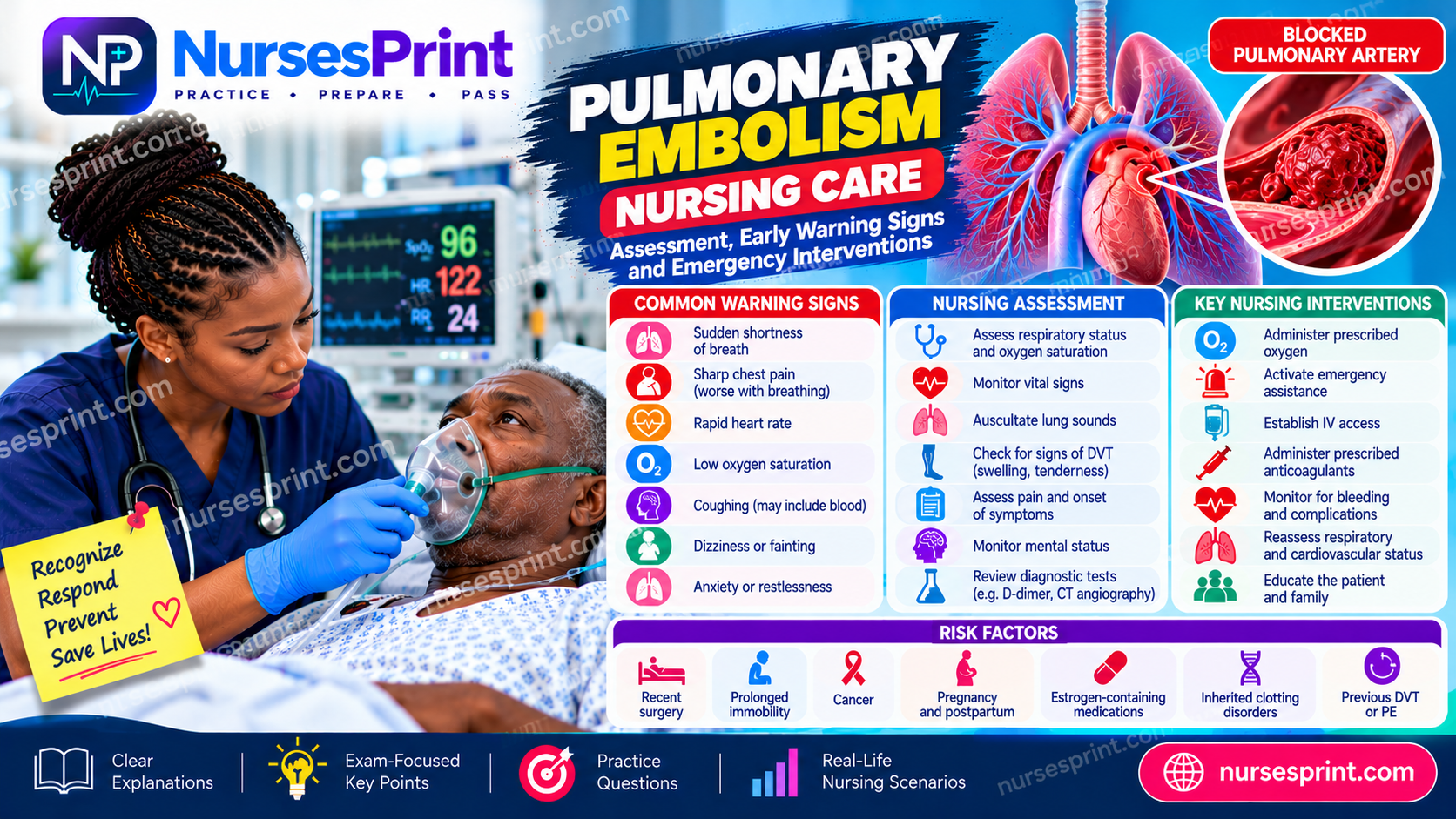
Pulmonary embolism nursing care requires rapid recognition, immediate assessment and timely emergency intervention. A pulmonary embolism (PE) occurs when a blood clot or another substance obstructs blood flow through a pulmonary artery.
Most pulmonary emboli originate from blood clots in the deep veins of the legs or pelvis.
Without prompt treatment, a significant pulmonary embolism can cause respiratory failure, cardiovascular collapse or death.
Understanding this emergency helps nursing students develop clinical judgment and prepare for medical-surgical nursing examinations.
What Is a Pulmonary Embolism?
A pulmonary embolism is a blockage within the pulmonary arterial circulation.
The obstruction can impair blood flow through the lungs and place additional strain on the right side of the heart.
Pulmonary embolism is closely associated with deep vein thrombosis (DVT). Together, these conditions are known as venous thromboembolism.
According to the Centers for Disease Control and Prevention, blood clots can cause serious complications when they travel to the lungs.
1. Recognize the Early Warning Signs of Pulmonary Embolism
Symptoms may develop suddenly and vary depending on the severity of the obstruction.
Common warning signs include:
Sudden shortness of breath
Sharp chest pain that worsens with breathing
Rapid heart rate
Increased respiratory rate
Low oxygen saturation
Coughing that may include blood
Dizziness or fainting
Anxiety or unexplained restlessness
Severe pulmonary embolism may cause hypotension, shock or cardiac arrest.
Nursing Tip: Sudden breathlessness and chest pain in a patient with recent surgery or prolonged immobility should raise immediate concern for pulmonary embolism.
2. Identify Important Risk Factors
Recognizing risk factors helps nurses identify patients who require closer observation.
Important risk factors include:
Recent major surgery
Prolonged immobility
Previous DVT or pulmonary embolism
Active cancer
Pregnancy and the postpartum period
Estrogen-containing medications
Certain inherited clotting disorders
However, pulmonary embolism can occur without an obvious risk factor.
3. Perform a Priority Nursing Assessment
When pulmonary embolism is suspected, nurses should immediately assess the patient's clinical stability.
Airway and Breathing: Evaluate respiratory rate, breathing effort and oxygen saturation.
Circulation: Monitor heart rate, blood pressure and peripheral perfusion.
Mental Status: Assess for confusion, dizziness or reduced consciousness.
Chest Symptoms: Determine the onset and characteristics of chest pain.
Lower Extremities: Observe for unilateral swelling, tenderness or other possible DVT findings.
Diagnostic investigations may include CT pulmonary angiography, D-dimer testing and ultrasound examinations.
The American Heart Association provides additional information about venous thromboembolism and its complications.
4. Understand Priority Nursing Interventions
Pulmonary embolism is a medical emergency requiring coordinated care.
Priority nursing actions include:
Activate emergency assistance: Immediately escalate suspected pulmonary embolism with signs of instability.
Assess oxygenation: Monitor respiratory function and administer prescribed oxygen when indicated.
Monitor cardiovascular status: Watch for hypotension, tachycardia and deteriorating perfusion.
Establish intravenous access: Prepare for prescribed emergency medications and diagnostic procedures.
Administer prescribed anticoagulants: Monitor for bleeding and other complications.
Prepare for advanced treatment: Selected high-risk patients may require thrombolysis or catheter-based intervention.
Reassess frequently: Monitor respiratory status, vital signs and treatment response.
Treatment decisions depend on clinical severity, bleeding risk and the patient's overall condition.
5. Practice Pulmonary Embolism Nursing Exam Questions
Practice Question:
A postoperative patient suddenly develops shortness of breath, chest pain and an oxygen saturation of 86%. What is the nurse's priority action?
A. Encourage the patient to walk.
B. Offer oral fluids.
C. Immediately assess breathing, activate emergency assistance and provide appropriate oxygen support.
D. Document the findings and reassess after one hour.
Correct Answer: C
Rationale: Sudden respiratory distress following surgery may indicate pulmonary embolism. Immediate assessment, oxygen support and emergency escalation are essential.
Explore additional nursing examination preparation resources at NursesPrint to strengthen your emergency nursing knowledge.
Frequently Asked Questions
What is the most common symptom of pulmonary embolism?
Sudden shortness of breath is a common symptom, although presentations vary considerably.
What is the nurse's priority when pulmonary embolism is suspected?
Assess airway, breathing and circulation while urgently escalating care.
Can pulmonary embolism occur without chest pain?
Yes. Some patients experience breathlessness, tachycardia or unexplained clinical deterioration without chest pain.
Conclusion
Pulmonary embolism nursing care requires early recognition, rapid clinical assessment and immediate intervention.
Nurses play a critical role in identifying warning signs, monitoring oxygenation and supporting emergency treatment.
Developing these skills strengthens patient safety and improves nursing examination readiness.
Prepare for emergency nursing scenarios with confidence. Visit NursesPrint for nursing practice questions and educational resources designed to support professional examination preparation.