Story
PCT Certification Exam Preparation: A Practical Guide to Passing the NHA CPCT/A Exam
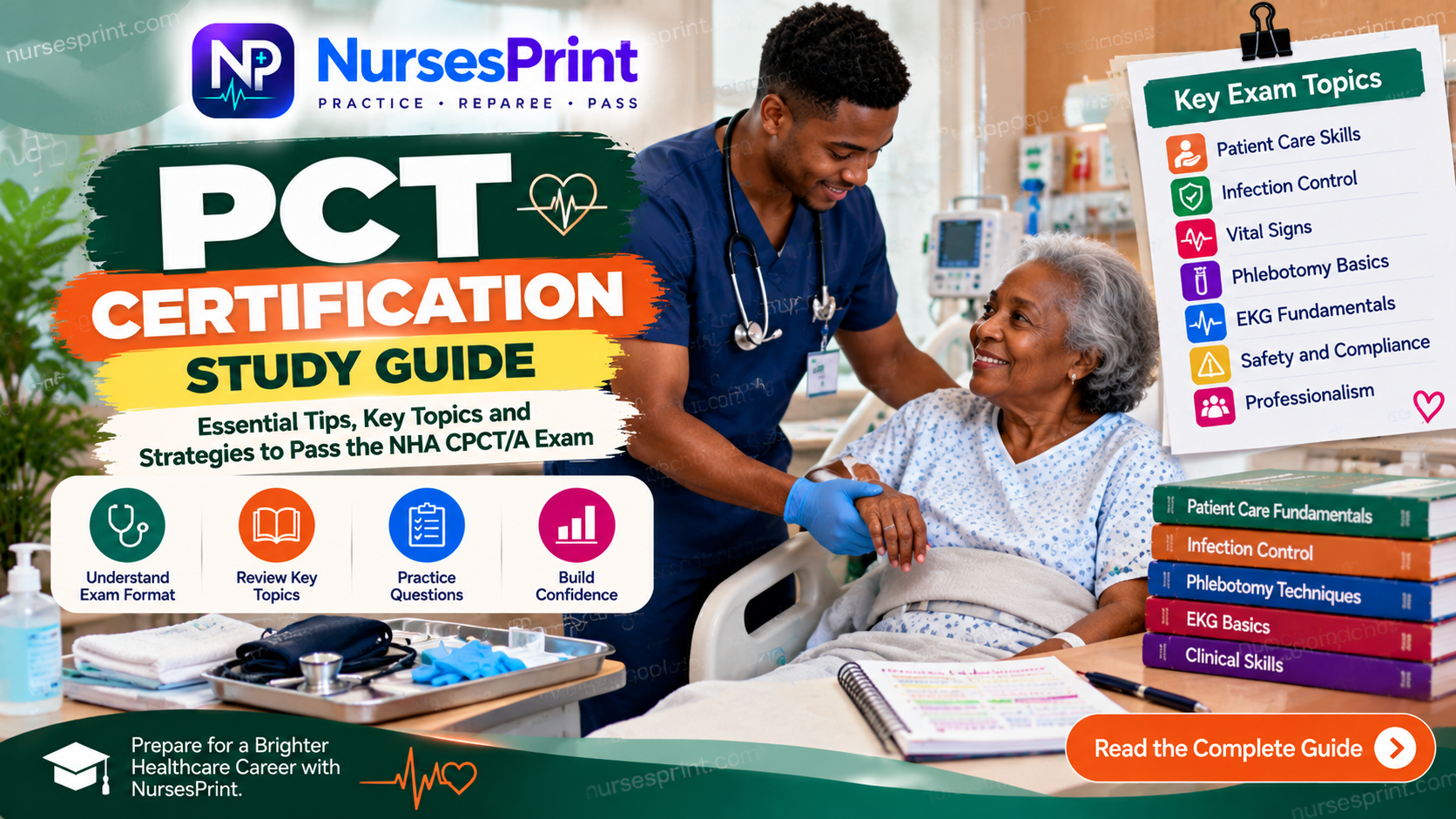
Becoming a certified Patient Care Technician is an exciting opportunity for individuals who want to build a career in healthcare. Patient care technicians support nurses and other healthcare professionals by assisting patients with essential daily activities and clinical procedures.
However, preparing for the PCT certification exam requires more than memorizing medical terminology. Candidates must understand patient safety, basic clinical procedures, communication and professional responsibilities.
If you are preparing for the NHA Certified Patient Care Technician/Assistant (CPCT/A) examination, this guide will help you develop an effective study routine and strengthen your examination readiness.
Understand the NHA CPCT/A Examination
The CPCT/A examination evaluates knowledge and skills relevant to patient care technician responsibilities.
The examination content covers important areas such as patient care, safety and compliance, infection control, phlebotomy and EKG-related responsibilities.
Before beginning your preparation, review the official examination outline to understand the topics you may encounter.
The National Healthcareer Association provides certification information, eligibility guidance and examination resources.
Use the current official outline when deciding how much time to dedicate to each subject.
Build a Study Schedule Around Your Weaknesses
A realistic study schedule helps you prepare consistently without becoming overwhelmed.
Begin by reviewing the examination domains and identifying topics that require additional attention.
For example, you might feel comfortable with patient hygiene procedures but need more practice with electrocardiography or specimen collection.
Divide your study time into manageable sessions.
Dedicate specific days to patient care fundamentals, infection prevention, clinical procedures and practice questions.
Review difficult subjects regularly instead of postponing them until examination week.
Master Essential Patient Care Skills
Patient care technicians assist with important activities that support patient comfort and well-being.
Depending on their training and workplace responsibilities, these activities may include helping patients with mobility, hygiene, nutrition and routine observations.
During examination preparation, focus on understanding the purpose of each procedure.
Consider how patient positioning affects comfort and safety.
Review appropriate methods for assisting patients with transfers and mobility.
Remember that patient dignity, privacy and communication are essential components of quality care.
Strengthen Infection Prevention Knowledge
Infection prevention is an important part of patient care technician responsibilities.
Review hand hygiene, personal protective equipment, standard precautions and appropriate handling of potentially contaminated materials.
Understand when gloves, masks or other protective equipment may be necessary.
The Centers for Disease Control and Prevention provides authoritative guidance on infection prevention practices in healthcare settings.
Use these principles to understand why certain safety procedures are necessary.
Strong infection prevention knowledge supports both examination preparation and responsible clinical practice.
Review Vital Signs and Clinical Procedures
Patient care technicians may assist with obtaining and documenting vital signs within their authorized scope of practice.
Review temperature, pulse, respiration, blood pressure and oxygen saturation.
Understand how to recognize findings that require prompt reporting to the supervising healthcare professional.
Also review the fundamentals of phlebotomy and EKG procedures covered by your examination outline.
Focus on patient identification, preparation, infection prevention and accurate documentation.
Remember that practical responsibilities depend on workplace policies, training and applicable regulations.
Practice Patient Communication and Professionalism
Technical knowledge alone is not enough for effective patient care.
Patient care technicians regularly interact with individuals who may be anxious, uncomfortable or unfamiliar with medical procedures.
Practice communicating clearly and respectfully.
Review patient confidentiality, professional boundaries and the importance of reporting concerns through appropriate channels.
When answering scenario-based questions, consider which response protects patient safety while maintaining dignity and respect.
Use Practice Questions to Improve Exam Readiness
Practice questions help you apply knowledge to situations similar to those encountered during certification examinations.
After completing each practice session, review incorrect answers and identify the underlying concepts.
Keep a record of topics requiring additional revision.
You can explore healthcare examination preparation resources through NursesPrint to support your study routine.
Use the current NHA examination outline to ensure your preparation covers the required competencies.
Final Thoughts: Prepare for Your PCT Certification With Confidence
Successful PCT certification preparation requires consistent studying, practical understanding and attention to patient safety.
Focus on essential clinical skills, infection prevention, professional communication and the responsibilities of patient care technicians.
By developing a realistic study schedule and reviewing your progress regularly, you can approach the NHA CPCT/A examination with greater confidence.
Ready to take the next step in your healthcare career?
Visit NursesPrint for educational resources and examination preparation support.
NursesPrint — Practice • Prepare • Pass