Story
Infection Prevention and Control in Nursing: Essential Practices Every Nurse Should Know
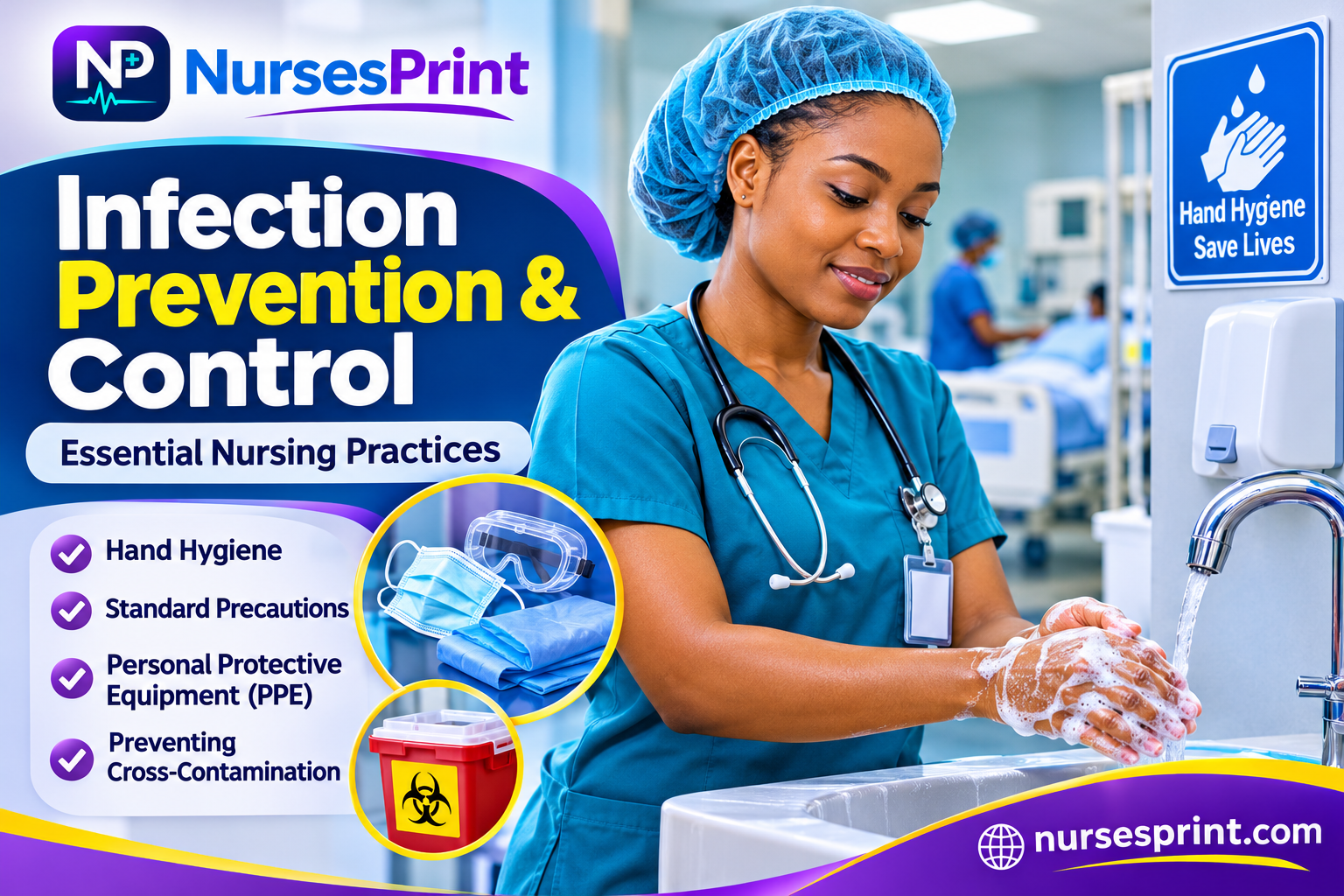
Infection prevention and control in nursing is one of the most important foundations of safe patient care. Every day, nurses encounter situations where harmful microorganisms can spread between patients, healthcare workers and medical equipment.
Understanding how infections spread helps nurses protect vulnerable patients while maintaining a safe healthcare environment.
Whether you are beginning nursing school or preparing for a professional examination, mastering infection control principles can strengthen your clinical judgment and confidence.
What Is Infection Prevention and Control in Nursing?
Infection prevention and control refers to evidence-based practices designed to reduce the transmission of infectious microorganisms in healthcare settings.
These practices protect patients from healthcare-associated infections while reducing occupational exposure among healthcare professionals.
Effective infection control requires consistent attention to hygiene, environmental cleanliness, personal protective equipment and safe clinical procedures.
According to the Centers for Disease Control and Prevention (CDC), healthcare facilities should implement core infection prevention practices across all patient care environments.
1. Practice Proper Hand Hygiene
Hand hygiene is one of the most effective ways to prevent infections in healthcare facilities.
Nurses should clean their hands at essential moments, including:
Before touching a patient
Before performing an aseptic procedure
After exposure to blood or body fluids
After touching a patient or their surroundings
Immediately after removing gloves
Alcohol-based hand sanitizers are preferred in most routine clinical situations when hands are not visibly dirty.
Soap and water should be used when hands are visibly soiled and in other situations specified by infection prevention guidance.
The CDC's clinical hand hygiene recommendations provide additional guidance on proper handwashing techniques and appropriate sanitizer use.
2. Understand Standard Precautions
Standard precautions are infection prevention measures applied to every patient regardless of their known infection status.
These measures include appropriate hand hygiene, respiratory hygiene, safe injection practices and the use of personal protective equipment when exposure is anticipated.
For example, nurses should wear gloves when contact with blood or potentially infectious body fluids is expected.
However, wearing gloves never replaces proper hand hygiene.
Understanding standard precautions is essential because these principles frequently appear in nursing fundamentals examinations.
3. Use Personal Protective Equipment Correctly
Personal protective equipment helps reduce exposure to infectious materials.
Common protective equipment includes gloves, gowns, masks and eye protection.
The appropriate equipment depends on the anticipated exposure and required transmission-based precautions.
Nurses must also understand how to put on and remove protective equipment safely.
Incorrect removal techniques can contaminate clothing or exposed skin.
During clinical practice, always follow established institutional procedures for selecting and removing protective equipment.
4. Prevent Cross-Contamination
Cross-contamination occurs when microorganisms are transferred between people, equipment or surfaces.
Nurses can reduce this risk by disinfecting reusable equipment appropriately and maintaining clean patient care environments.
Frequently touched surfaces such as bed rails, bedside tables and medical equipment require particular attention.
Clean supplies should remain separate from contaminated materials.
Proper handling of medical waste and used linens also contributes to infection prevention.
5. Apply Infection Control Knowledge to Nursing Exams
Nursing examinations often assess infection control through clinical scenarios rather than simple definitions.
For example, a question might ask what a nurse should do immediately after removing contaminated gloves.
The correct priority is to perform hand hygiene.
When answering infection control questions, identify the potential source of contamination and determine which action best protects the patient.
Regular practice with scenario-based questions can help develop this reasoning process.
Visit NursesPrint to explore nursing examination preparation resources and strengthen your understanding of essential nursing concepts.
Frequently Asked Questions
Why is infection control important in nursing?
Infection control helps prevent healthcare-associated infections while protecting patients, nurses and other healthcare professionals from avoidable exposure.
What is the difference between standard and transmission-based precautions?
Standard precautions apply to all patients. Transmission-based precautions provide additional protection when specific infectious agents require contact, droplet or airborne precautions.
What is the most important infection prevention practice?
Hand hygiene is a fundamental infection prevention measure because contaminated hands can transfer microorganisms between patients and healthcare environments.
Conclusion
Infection prevention and control is an essential nursing responsibility that directly influences patient safety and healthcare quality.
By practicing proper hand hygiene, following standard precautions and using protective equipment appropriately, nurses can reduce infection risks and deliver safer care.
Developing these skills also strengthens clinical reasoning and prepares nursing students for examination questions involving infection prevention.
Ready to strengthen your nursing knowledge? Explore educational resources and nursing practice materials at NursesPrint and take another step toward confident exam preparation.