Story
Hyponatremia Nursing Care: Early Warning Signs, Assessment and Priority Interventions
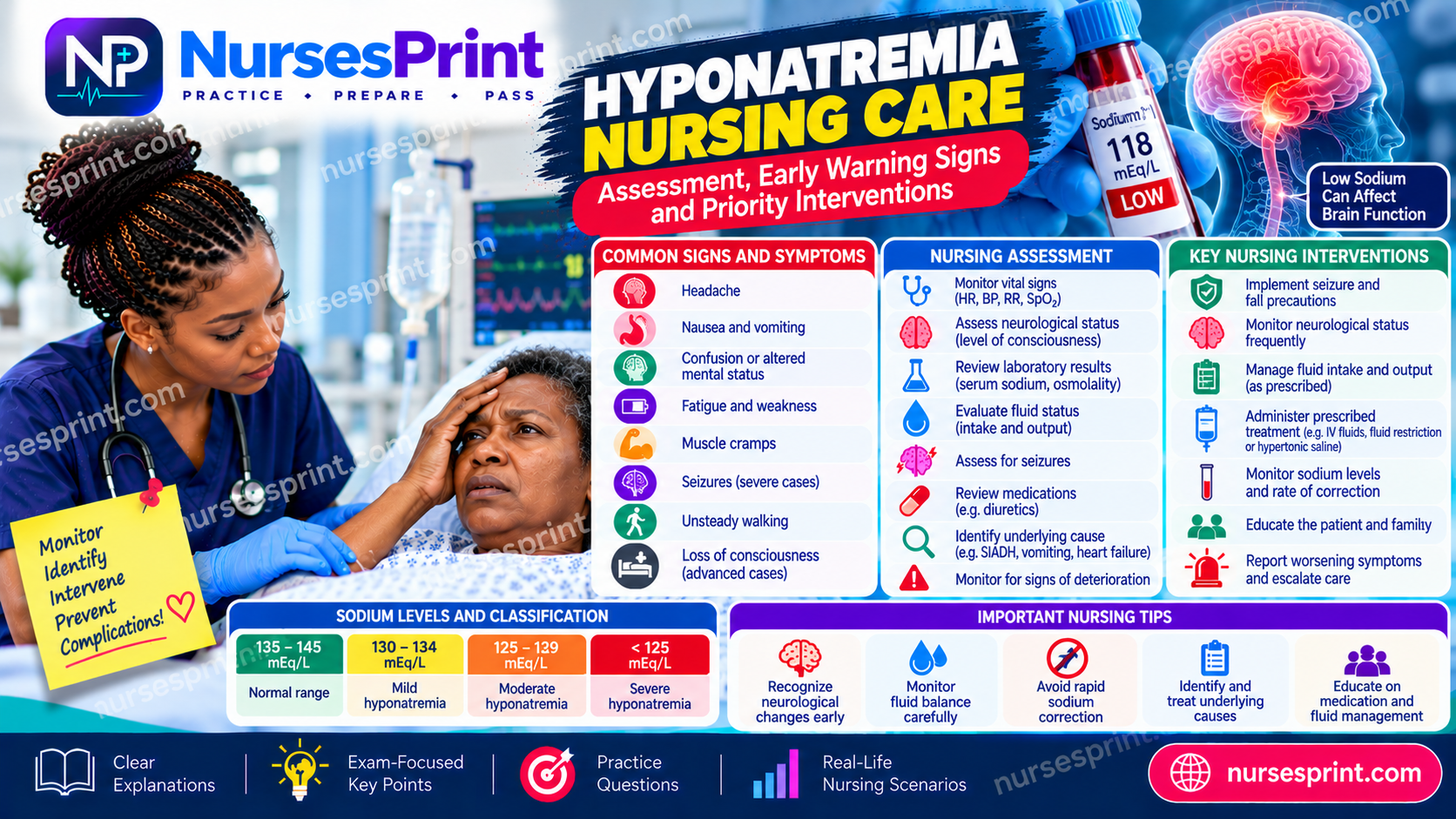
Hyponatremia nursing care requires careful neurological assessment, accurate fluid monitoring and timely recognition of complications. Hyponatremia occurs when the sodium concentration in the blood falls below 135 mEq/L.
Sodium helps regulate fluid balance, nerve impulses and muscle function. When sodium levels decrease significantly, water can move into brain cells and cause potentially dangerous neurological symptoms.
Understanding hyponatremia helps nurses provide safer patient care while strengthening clinical judgment for nursing examinations.
What Causes Hyponatremia?
Hyponatremia develops when the body retains excessive water relative to sodium or loses sodium under certain conditions.
Common causes include:
Excessive water intake
Prolonged vomiting or diarrhea
Certain diuretic medications
Syndrome of inappropriate antidiuretic hormone secretion (SIADH)
Heart failure or liver disease
Certain kidney disorders
According to the National Kidney Foundation, low sodium levels can affect neurological function and require appropriate medical evaluation.
1. Recognize the Warning Signs of Hyponatremia
Symptoms depend on the sodium concentration and how quickly it decreases.
Common findings include:
Headache
Nausea and vomiting
Muscle weakness
Fatigue
Confusion
Difficulty concentrating
Unsteady walking
Seizures in severe cases
Reduced consciousness
A rapid decline in sodium can cause severe symptoms even when the measured concentration is not extremely low.
Nursing Tip: New confusion or seizures in a patient with hyponatremia require immediate assessment and emergency escalation.
2. Understand Important Laboratory Findings
Serum sodium measurement is essential for identifying hyponatremia.
Sodium Level | Common Classification |
|---|---|
135–145 mEq/L | Typical reference range |
130–134 mEq/L | Mild hyponatremia |
125–129 mEq/L | Moderate hyponatremia |
Below 125 mEq/L | Profound hyponatremia |
Additional investigations may include serum osmolality, urine osmolality, urine sodium and kidney function tests.
Blood glucose should also be reviewed because significant hyperglycemia can lower the measured sodium concentration.
Clinical interpretation depends on the patient's symptoms, fluid status and underlying condition.
3. Perform a Comprehensive Nursing Assessment
Nurses should evaluate neurological function and fluid balance.
Important assessment priorities include:
Assessing level of consciousness
Monitoring vital signs
Identifying confusion or behavioral changes
Evaluating muscle strength
Monitoring for seizures
Recording accurate fluid intake and output
Assessing daily weight when indicated
Reviewing medications and laboratory trends
The patient's fluid status is particularly important because hyponatremia may occur with fluid depletion, normal-appearing fluid volume or fluid overload.
4. Identify Priority Nursing Interventions
Treatment depends on the cause, severity and duration of hyponatremia.
Monitor Neurological Status
Assess for worsening confusion, seizures or reduced consciousness.
Implement Safety Precautions
Provide appropriate fall and seizure precautions when clinically indicated.
Monitor Fluid Balance
Record intake and output accurately. Follow prescribed fluid restrictions or replacement plans.
Administer Prescribed Treatment
Treatment may include isotonic fluids, fluid restriction or carefully controlled hypertonic saline.
Monitor Sodium Correction
Frequent laboratory monitoring helps identify overly rapid sodium changes.
Escalate Severe Symptoms
Seizures or significant neurological deterioration require immediate emergency intervention.
The Merck Manual Professional Edition provides additional clinical information about hyponatremia evaluation and management.
5. Understand Why Rapid Sodium Correction Is Dangerous
Correcting hyponatremia too rapidly can cause osmotic demyelination syndrome, a serious neurological complication.
Patients with chronic hyponatremia may be particularly vulnerable.
Nurses should monitor prescribed fluid administration, laboratory trends and neurological changes carefully.
Sodium correction targets must be individualized by the treating team.
6. Practice Hyponatremia Nursing Examination Questions
Practice Question:
A hospitalized patient has a sodium level of 118 mEq/L and develops a generalized seizure. What is the nurse's priority?
A. Encourage oral water intake.
B. Initiate seizure safety measures and activate emergency assistance.
C. Wait for the next scheduled laboratory test.
D. Encourage the patient to walk.
Correct Answer: B
Rationale: Severe symptomatic hyponatremia can cause cerebral edema and seizures. Immediate patient protection, airway assessment and emergency treatment are essential.
Explore nursing practice resources at NursesPrint to strengthen your knowledge of electrolyte emergencies.
Frequently Asked Questions
What sodium level indicates hyponatremia?
A serum sodium concentration below 135 mEq/L generally indicates hyponatremia.
Why can hyponatremia cause confusion?
Low sodium can create an osmotic imbalance that causes water to enter brain cells, potentially affecting neurological function.
What is the priority nursing assessment?
Neurological status, airway safety and signs of clinical deterioration are important priorities.
Conclusion
Hyponatremia nursing care requires early recognition, neurological monitoring and careful management of fluid and sodium balance.
Nurses help prevent complications by identifying warning signs, monitoring treatment and escalating emergencies promptly.
Strengthen your electrolyte nursing knowledge: Visit NursesPrint for nursing examination preparation resources and clinical practice questions.