Story
Hyperkalemia Nursing Care: ECG Changes, Warning Signs and Emergency Interventions
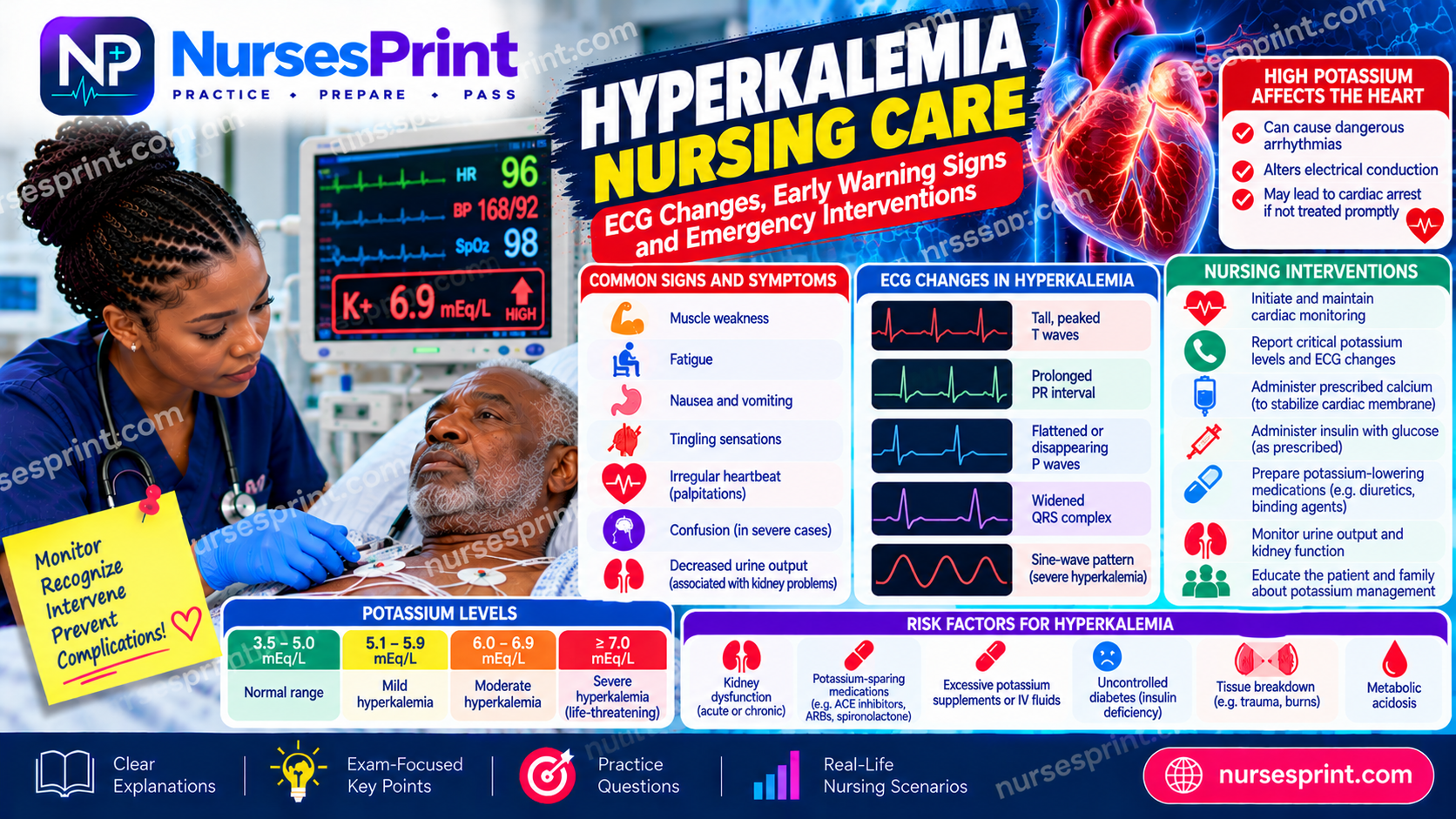
Hyperkalemia nursing care requires rapid assessment, careful cardiac monitoring and timely intervention. Hyperkalemia occurs when the potassium concentration in the blood rises above the normal range, potentially disrupting the electrical activity of the heart.
Potassium is essential for normal nerve transmission, muscle contraction and cardiac function. However, excessively high potassium levels can trigger dangerous arrhythmias and cardiac arrest.
Understanding hyperkalemia helps nursing students strengthen clinical judgment and prepare for medical-surgical nursing examinations.
What Causes Hyperkalemia?
Hyperkalemia generally refers to a serum potassium level above approximately 5.0 mEq/L, although laboratory reference ranges vary.
Common causes include:
Acute or chronic kidney dysfunction
Potassium-sparing medications
Certain blood pressure medications
Excessive potassium supplementation
Metabolic acidosis
Significant tissue breakdown
Uncontrolled diabetes with insulin deficiency
According to the National Kidney Foundation, hyperkalemia can become dangerous because elevated potassium affects cardiac electrical activity.
1. Recognize the Warning Signs of Hyperkalemia
Some patients have no obvious symptoms despite dangerously elevated potassium levels.
Possible findings include:
Muscle weakness
Fatigue
Nausea
Tingling sensations
Palpitations
Reduced muscle strength
Irregular heartbeat
Severe hyperkalemia may cause life-threatening cardiac arrhythmias.
Nursing Tip: Never rely on symptoms alone to determine hyperkalemia severity. Laboratory findings, ECG assessment and the patient's clinical condition must be considered together.
2. Understand Hyperkalemia ECG Changes
ECG monitoring is especially important because elevated potassium can interfere with cardiac conduction.
Potential ECG abnormalities include:
Tall, Peaked T Waves: May appear during hyperkalemia.
Prolonged PR Interval: Can indicate delayed electrical conduction.
Flattened or Disappearing P Waves: May occur as potassium increases.
Widened QRS Complex: Suggests significant conduction disturbance.
Sine-Wave Pattern: A dangerous finding associated with severe electrical instability.
These abnormalities do not always develop in a predictable sequence.
A normal ECG does not exclude severe hyperkalemia.
3. Perform a Priority Nursing Assessment
When hyperkalemia is suspected, nurses should promptly assess cardiovascular stability.
Important assessment priorities include:
Monitoring heart rate and rhythm
Assessing blood pressure
Reviewing serum potassium results
Evaluating kidney function
Assessing muscle strength
Reviewing prescribed medications
Monitoring urine output
Identifying signs of clinical deterioration
Unexpected potassium results may require repeat testing to exclude sample-related errors, but urgent treatment should not be delayed when severe hyperkalemia is strongly suspected.
4. Identify Emergency Nursing Interventions
Severe hyperkalemia requires coordinated emergency management.
Initiate Cardiac Monitoring
Monitor for arrhythmias and conduction abnormalities.
Escalate Critical Findings
Immediately report severe potassium elevation or concerning ECG changes.
Administer Prescribed Calcium
Intravenous calcium may be administered to stabilize the cardiac membrane when indicated. It does not lower serum potassium.
Support Potassium Redistribution
Prescribed insulin with glucose can temporarily shift potassium into cells. Blood glucose must be monitored closely.
Facilitate Potassium Removal
Depending on the patient's condition, treatment may include potassium-binding medications, diuretics or dialysis.
Reassess Treatment Response
Monitor repeat potassium levels, ECG findings and blood glucose.
The UK Kidney Association provides clinical guidance relevant to managing hyperkalemia.
5. Practice Hyperkalemia Nursing Examination Questions
Practice Question:
A patient with acute kidney injury has a serum potassium level of 6.9 mEq/L and a widened QRS complex. What is the nurse's priority?
A. Encourage potassium-rich foods.
B. Continue routine observation.
C. Activate urgent medical assistance and initiate cardiac monitoring.
D. Encourage physical exercise.
Correct Answer: C
Rationale: Severe hyperkalemia with ECG abnormalities indicates a risk of life-threatening arrhythmias. Immediate escalation, cardiac monitoring and preparation for prescribed emergency treatment are essential.
Explore additional nursing examination questions through NursesPrint to strengthen your clinical reasoning.
Frequently Asked Questions
What potassium level indicates hyperkalemia?
Hyperkalemia generally occurs when serum potassium exceeds approximately 5.0 mEq/L, depending on the laboratory reference range.
What is the most dangerous complication of hyperkalemia?
Life-threatening cardiac arrhythmias and cardiac arrest are among the most serious complications.
Why is calcium administered during severe hyperkalemia?
Intravenous calcium helps stabilize cardiac electrical activity when indicated, but it does not remove potassium from the body.
Conclusion
Hyperkalemia nursing care requires early recognition, careful ECG monitoring and immediate intervention when serious abnormalities develop.
Nurses play a critical role in detecting dangerous potassium levels, identifying cardiac complications and supporting emergency treatment.
Strengthen your electrolyte nursing knowledge: Visit NursesPrint for nursing study resources and practice questions designed to support examination success.