Story
Heart Failure Nursing Care: Early Warning Signs, Assessment and Priority Interventions
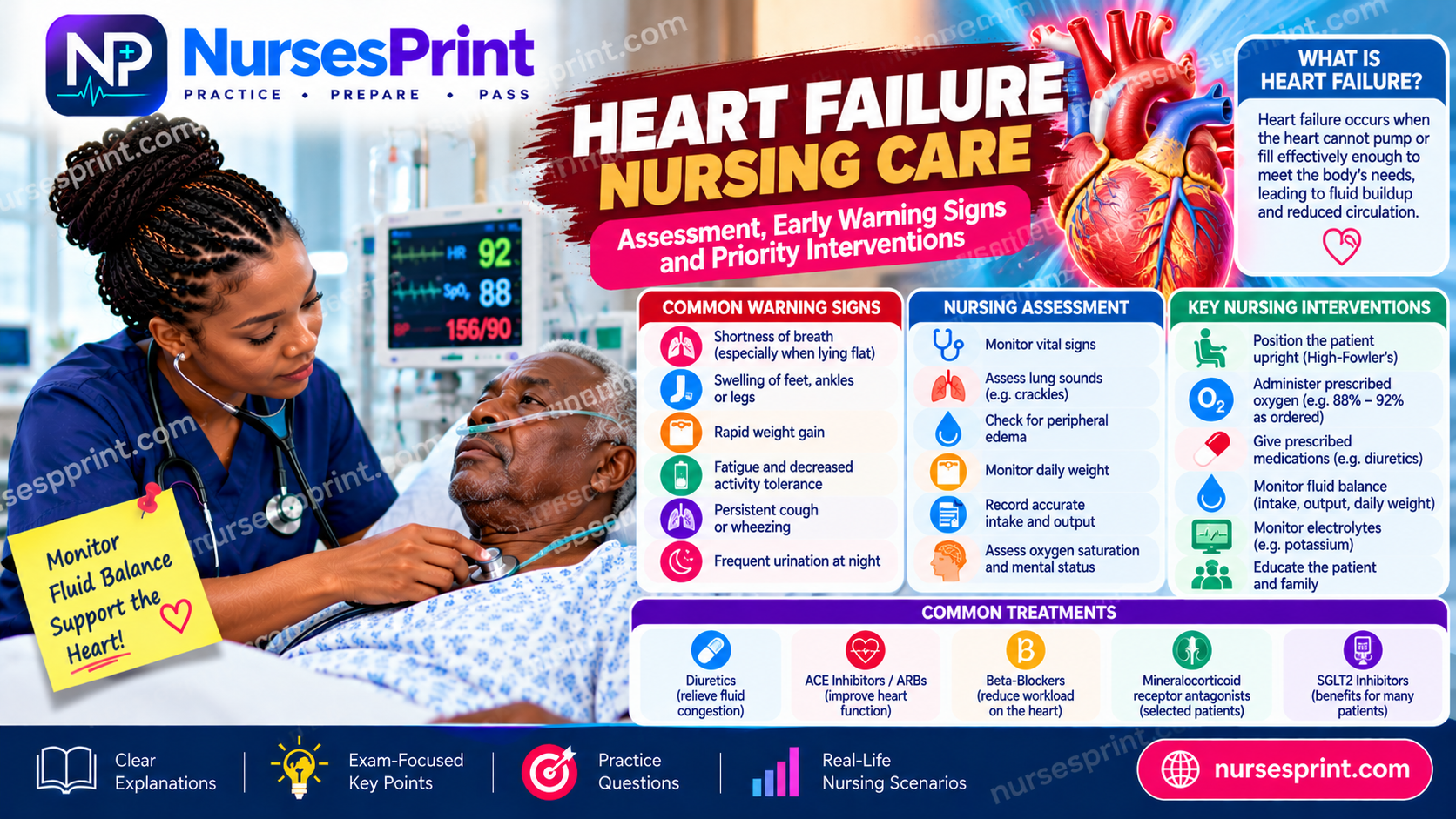
Heart failure nursing care requires careful cardiovascular assessment, early recognition of fluid overload and consistent monitoring of patient symptoms.
Heart failure develops when the heart cannot pump or fill effectively enough to meet the body's circulatory needs. This can lead to fluid accumulation, reduced exercise tolerance and impaired organ perfusion.
Nurses play an important role in recognizing clinical deterioration, administering prescribed treatments and educating patients about managing their condition.
Understanding heart failure also strengthens clinical judgment for nursing examinations.
What Is Heart Failure?
Heart failure is a clinical syndrome associated with structural or functional abnormalities of the heart.
It may involve reduced left ventricular ejection fraction or impaired ventricular relaxation and filling.
Common causes include coronary artery disease, hypertension, cardiomyopathy and heart valve disorders.
According to the American Heart Association, early recognition and appropriate management can help improve symptoms and quality of life.
1. Recognize the Warning Signs of Heart Failure
Patients with worsening heart failure may develop symptoms associated with fluid retention or reduced cardiac output.
Common findings include:
Shortness of breath during activity or rest
Difficulty breathing when lying flat
Swelling of the feet, ankles or legs
Rapid weight gain from fluid retention
Persistent fatigue
Reduced exercise tolerance
Coughing or wheezing
Increased nighttime urination
Severe deterioration may cause respiratory distress, confusion or poor peripheral perfusion.
Nursing Tip: Sudden breathlessness accompanied by low oxygen saturation and abnormal lung sounds requires immediate assessment for possible acute pulmonary edema.
2. Perform a Comprehensive Cardiac Assessment
Nurses should evaluate cardiovascular function and identify signs of fluid overload.
Important assessment priorities include:
Vital Signs: Monitor blood pressure, heart rate, respiratory rate and oxygen saturation.
Lung Sounds: Assess for crackles or other abnormal respiratory findings.
Peripheral Edema: Evaluate swelling in the lower extremities.
Daily Weight: Monitor weight changes using consistent measurement conditions.
Fluid Balance: Document intake and output accurately.
Mental Status: Identify confusion or reduced alertness that may suggest impaired perfusion.
Laboratory investigations may include natriuretic peptides, electrolytes and kidney function tests.
3. Understand Priority Heart Failure Nursing Interventions
Nursing interventions depend on the severity of symptoms and the patient's clinical condition.
Important actions include:
Assess airway and breathing: Identify respiratory distress and signs of inadequate oxygenation.
Position the patient upright: High-Fowler's positioning may improve breathing comfort.
Administer prescribed oxygen: Provide supplemental oxygen when clinically indicated.
Administer prescribed medications: These may include diuretics and other heart failure therapies.
Monitor fluid balance: Record intake, output and daily weight.
Monitor electrolytes: Watch for potassium abnormalities during diuretic treatment.
Evaluate treatment response: Reassess breathing, edema, blood pressure and urine output.
Patients with acute pulmonary edema or hemodynamic instability require urgent medical intervention.
4. Understand Common Heart Failure Medications
Medication management is an important component of heart failure care.
Diuretics: Help relieve fluid congestion by increasing urine production.
Beta-Blockers: Certain evidence-based agents improve outcomes in eligible patients with heart failure.
ACE Inhibitors, ARBs and ARNIs: Help modify harmful cardiovascular pathways in appropriate patients.
Mineralocorticoid Receptor Antagonists: Improve outcomes in selected patients but require potassium and kidney function monitoring.
SGLT2 Inhibitors: Provide benefits for many patients with heart failure, including some without diabetes.
The National Heart, Lung, and Blood Institute provides additional information about heart failure diagnosis and treatment.
Medication selection depends on heart failure type, kidney function, blood pressure and other clinical factors.
5. Practice Heart Failure Nursing Examination Questions
Practice Question:
A patient with heart failure develops severe shortness of breath, bilateral lung crackles and an oxygen saturation of 84%. What should the nurse do first?
A. Encourage the patient to walk.
B. Offer additional oral fluids.
C. Position the patient upright, assess breathing and initiate emergency interventions.
D. Wait for the next scheduled assessment.
Correct Answer: C
Rationale: Severe hypoxemia and crackles suggest acute respiratory compromise, potentially caused by pulmonary edema. Immediate respiratory assessment, upright positioning, appropriate oxygen support and urgent escalation are necessary.
Practice additional cardiovascular nursing scenarios through NursesPrint to strengthen clinical prioritization skills.
Frequently Asked Questions
What is the priority nursing assessment for heart failure?
Assess respiratory status, oxygenation, circulation and signs of fluid overload.
Why are daily weights important in heart failure?
Rapid weight increases may indicate fluid retention before other symptoms become obvious.
Can heart failure occur with a normal ejection fraction?
Yes. Heart failure with preserved ejection fraction occurs when symptoms and objective evidence of heart failure are present despite a relatively preserved ejection fraction.
Conclusion
Heart failure nursing care requires early recognition of worsening symptoms, comprehensive assessment and timely clinical interventions.
Nurses help improve patient safety by monitoring respiratory function, evaluating fluid balance and supporting prescribed treatment.
Strengthen your cardiovascular nursing knowledge: Visit NursesPrint for nursing examination preparation resources and practice questions designed to build clinical confidence.