Story
ECG Interpretation for Nurses: Understanding Heart Rhythms and Recognizing Cardiac Emergencies
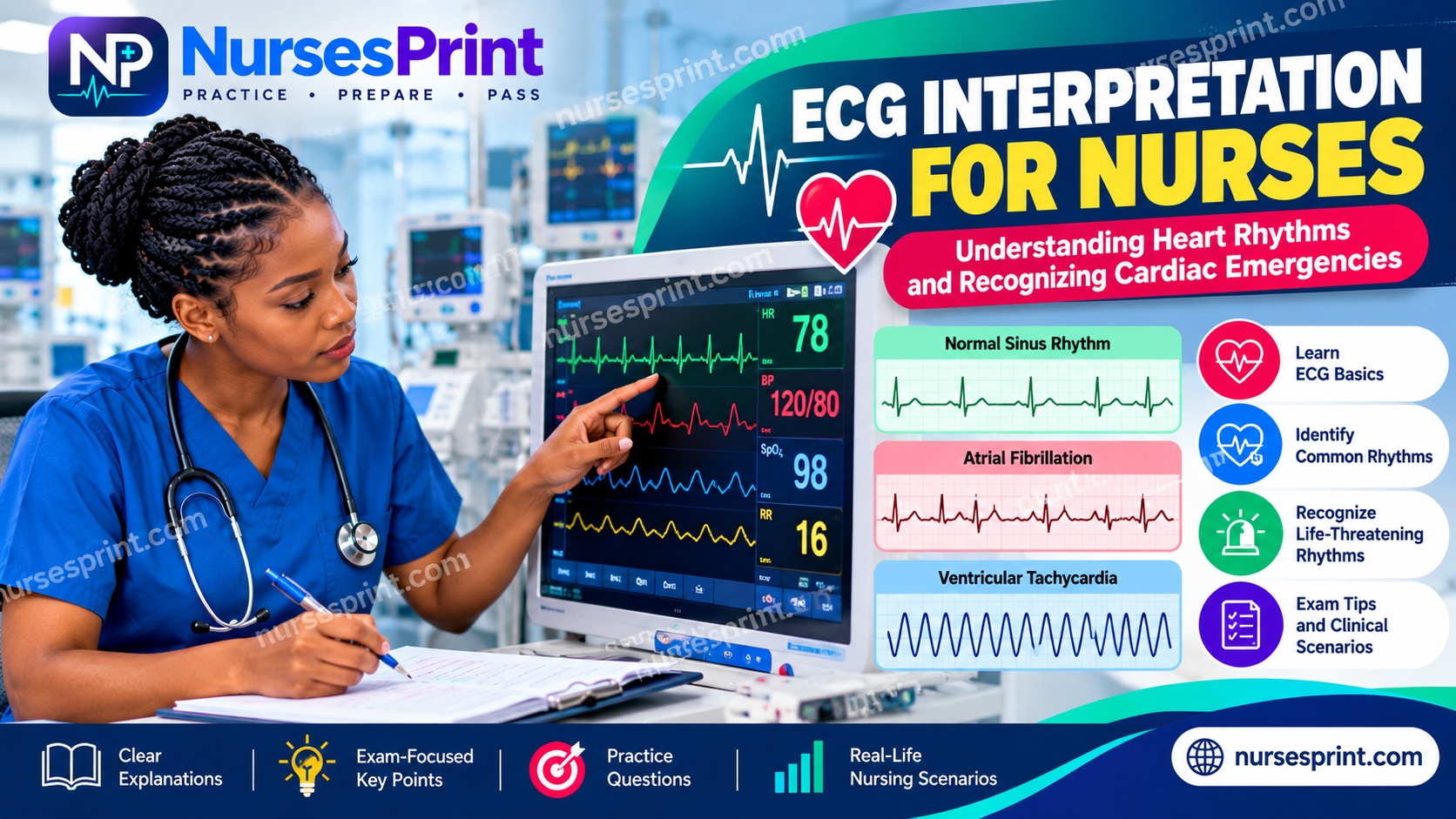
ECG interpretation for nurses is an essential clinical skill that supports early recognition of cardiac abnormalities and potentially life-threatening emergencies.
An electrocardiogram (ECG or EKG) records the electrical activity of the heart. Understanding these electrical patterns helps nurses recognize abnormal rhythms and determine when immediate intervention is necessary.
Whether you are studying cardiac nursing or preparing for a licensing examination, learning systematic ECG interpretation can improve your clinical judgment and confidence.
What Is an ECG and Why Is It Important?
An ECG measures electrical impulses responsible for coordinating heart contractions.
Healthcare professionals use ECG recordings to assess heart rate, rhythm and conduction abnormalities.
ECG interpretation helps identify conditions such as atrial fibrillation, ventricular tachycardia and certain forms of heart block.
The American Heart Association explains how electrocardiograms help healthcare professionals evaluate the heart's electrical activity.
For nurses, ECG monitoring is especially important when caring for patients experiencing chest pain, palpitations or unexplained changes in vital signs.
1. Understand the Basic Components of an ECG
Before identifying abnormal rhythms, nursing students should understand the essential ECG waveform components.
P Wave: Represents electrical activation of the atria.
PR Interval: Reflects electrical conduction from the atria through the atrioventricular conduction system.
QRS Complex: Represents ventricular depolarization.
ST Segment: Represents the period between ventricular depolarization and repolarization.
T Wave: Represents ventricular repolarization.
Understanding these components helps nurses recognize abnormalities in electrical conduction.
2. Recognize Normal Sinus Rhythm
Normal sinus rhythm originates from the sinoatrial node.
Typical characteristics include:
Heart rate between 60 and 100 beats per minute in resting adults
Regular R-R intervals
A consistent P wave before each QRS complex
PR interval between 0.12 and 0.20 seconds
QRS duration generally less than 0.12 seconds
Recognizing normal sinus rhythm provides a foundation for identifying abnormal cardiac rhythms.
Remember that rhythm interpretation must always be considered alongside the patient's clinical condition.
3. Identify Common Abnormal Heart Rhythms
Nursing examinations frequently assess recognition of common arrhythmias.
Sinus Bradycardia
Sinus bradycardia occurs when the sinus rhythm is slower than 60 beats per minute in adults.
It may be normal in some individuals but requires evaluation when accompanied by dizziness, hypotension or altered mental status.
Sinus Tachycardia
Sinus tachycardia occurs when the sinus rate exceeds 100 beats per minute.
Potential causes include fever, dehydration, pain, anxiety and reduced circulating blood volume.
Atrial Fibrillation
Atrial fibrillation produces an irregularly irregular ventricular rhythm with no consistent, distinct P waves.
It can increase the risk of stroke and other complications.
Ventricular Tachycardia
Ventricular tachycardia is a potentially dangerous rhythm originating in the ventricles.
It may occur with or without a palpable pulse.
Pulseless ventricular tachycardia requires immediate emergency intervention.
4. Recognize Life-Threatening Cardiac Rhythms
Some cardiac rhythms require immediate resuscitation measures.
Ventricular fibrillation produces chaotic electrical activity without effective ventricular contraction.
Pulseless ventricular tachycardia and ventricular fibrillation are shockable cardiac arrest rhythms.
Asystole and pulseless electrical activity are nonshockable rhythms.
The American Heart Association's CPR and Emergency Cardiovascular Care guidelines provide evidence-based recommendations for responding to cardiac emergencies.
Important Nursing Principle: Always assess the patient rather than relying exclusively on the monitor.
5. Apply ECG Knowledge to Nursing Examination Questions
Nursing examinations often combine ECG findings with patient symptoms.
Practice Question:
A nurse observes a wide-complex tachycardia on the cardiac monitor. The patient is unresponsive and has no palpable pulse. What is the priority action?
A. Document the rhythm and continue monitoring.
B. Administer oral medication.
C. Activate the emergency response system and begin CPR.
D. Encourage the patient to rest.
Correct Answer: C
Rationale: An unresponsive patient without a pulse requires immediate cardiac arrest management. High-quality CPR should begin promptly while a defibrillator is obtained and the rhythm is evaluated for defibrillation.
Practice more clinical judgment questions through NursesPrint to reinforce cardiac nursing knowledge.
Frequently Asked Questions
What is the easiest way to learn ECG interpretation?
Start with normal sinus rhythm and learn to evaluate rate, regularity, P waves, PR intervals and QRS complexes systematically.
What ECG rhythms require immediate defibrillation during cardiac arrest?
Ventricular fibrillation and pulseless ventricular tachycardia are shockable cardiac arrest rhythms.
Can an ECG monitor replace a physical patient assessment?
No. ECG monitoring provides important information but must be combined with assessment of consciousness, circulation and other clinical findings.
Conclusion
ECG interpretation is a valuable nursing skill that supports early recognition of cardiac abnormalities and safe clinical decision-making.
Understanding waveform components, identifying common arrhythmias and recognizing emergency rhythms can strengthen both patient care and examination performance.
Build your cardiac nursing confidence: Explore nursing study materials and practice questions at NursesPrint to prepare for clinical assessments and professional examinations.