Story
COPD Nursing Care: Respiratory Assessment, Oxygen Therapy and Priority Interventions
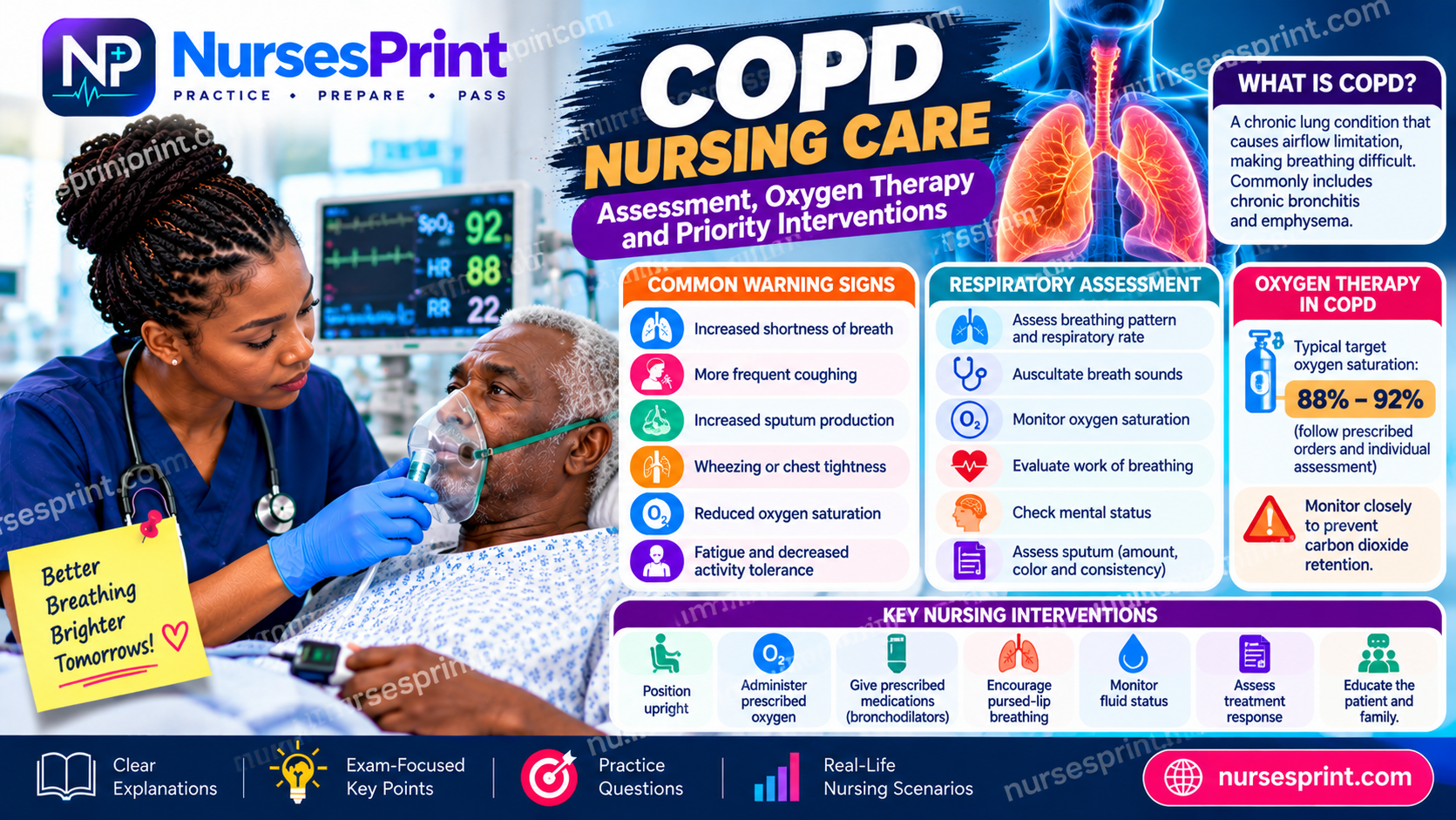
COPD nursing care requires comprehensive respiratory assessment, careful oxygen administration and early recognition of worsening symptoms.
Chronic obstructive pulmonary disease (COPD) is a progressive respiratory condition characterized by persistent airflow limitation. It commonly includes chronic bronchitis and emphysema.
Nurses play an important role in monitoring breathing patterns, identifying respiratory distress and educating patients about symptom management.
Understanding COPD also strengthens clinical judgment and prepares nursing students for medical-surgical nursing examinations.
What Is Chronic Obstructive Pulmonary Disease?
COPD is a chronic lung condition that makes breathing difficult because airflow through the lungs becomes restricted.
Smoking is a major risk factor, although exposure to air pollution, occupational irritants and genetic conditions can also contribute.
According to the World Health Organization, COPD is a major cause of illness and death worldwide.
Patients may experience persistent cough, mucus production, shortness of breath and reduced exercise tolerance.
1. Recognize the Warning Signs of COPD Exacerbation
A COPD exacerbation occurs when respiratory symptoms worsen beyond normal daily variations.
Common warning signs include:
Increased shortness of breath
More frequent coughing
Increased sputum production
Changes in sputum color or thickness
Wheezing or chest tightness
Increased respiratory rate
Reduced oxygen saturation
Fatigue or difficulty performing routine activities
Severe exacerbations may cause confusion, cyanosis or reduced consciousness.
Nursing Tip: A patient with worsening breathlessness and altered mental status requires immediate respiratory assessment and urgent escalation.
2. Perform a Comprehensive Respiratory Assessment
Nurses should evaluate breathing patterns and identify signs of respiratory compromise.
Important assessment priorities include:
Respiratory Rate: Monitor breathing frequency, depth and rhythm.
Oxygen Saturation: Use pulse oximetry to assess oxygenation while recognizing its limitations.
Breath Sounds: Auscultate for wheezing, diminished airflow or other abnormal findings.
Work of Breathing: Observe accessory muscle use, retractions and difficulty speaking.
Mental Status: Identify confusion, agitation or unusual drowsiness.
Sputum Assessment: Document changes in amount, color and consistency.
Arterial blood gas analysis may be required to assess oxygenation, ventilation and acid-base balance.
3. Understand Safe Oxygen Therapy in COPD
Oxygen therapy is essential when a patient develops clinically significant hypoxemia.
However, oxygen administration requires careful monitoring because some patients with COPD are vulnerable to carbon dioxide retention.
For patients experiencing an acute COPD exacerbation who require supplemental oxygen, a common initial target oxygen saturation is 88%–92%, pending individualized assessment and blood gas results.
This target should not be applied automatically to every patient with COPD.
Nurses should follow prescribed oxygen targets and reassess the patient's response.
The American Lung Association provides educational information about COPD symptoms and management.
Important: Never withhold oxygen from a critically hypoxemic patient because of concerns about carbon dioxide retention. Provide appropriate emergency care and escalate immediately.
4. Identify Priority COPD Nursing Interventions
Nursing interventions focus on improving ventilation, supporting oxygenation and reducing respiratory distress.
Important actions include:
Position the patient upright: High-Fowler's positioning may improve breathing comfort.
Assess airway and breathing: Identify respiratory distress and signs of deterioration.
Administer prescribed oxygen: Use the ordered delivery device and saturation target.
Administer prescribed medications: These may include bronchodilators and corticosteroids.
Encourage breathing techniques: Pursed-lip breathing may help reduce breathlessness.
Monitor treatment response: Reassess respiratory rate, oxygen saturation and mental status.
Escalate severe symptoms: Respiratory failure may require noninvasive ventilation or advanced respiratory support.
5. Practice COPD Nursing Examination Questions
Practice Question:
A patient hospitalized with a COPD exacerbation becomes increasingly drowsy and develops shallow breathing. What is the nurse's priority?
A. Encourage the patient to sleep.
B. Offer additional oral fluids.
C. Immediately assess respiratory status and activate urgent medical evaluation.
D. Delay assessment until the next scheduled observation.
Correct Answer: C
Rationale: Increasing drowsiness and shallow breathing may indicate worsening ventilation and possible respiratory failure. Immediate assessment and escalation are essential.
Practice similar respiratory nursing scenarios through NursesPrint to strengthen clinical reasoning.
Frequently Asked Questions
What is the priority nursing assessment for COPD?
Assess airway, breathing, respiratory effort, oxygen saturation and mental status.
Why is oxygen carefully monitored in COPD?
Some patients are susceptible to carbon dioxide retention during excessive oxygen administration, particularly during acute exacerbations.
What position helps patients with COPD breathe more comfortably?
An upright or supported forward-leaning position may reduce breathlessness and improve comfort.
Conclusion
COPD nursing care requires systematic respiratory assessment, appropriate oxygen therapy and prompt recognition of clinical deterioration.
Nurses play an essential role in monitoring symptoms, administering prescribed treatments and educating patients about long-term respiratory management.
Strengthen your respiratory nursing knowledge: Visit NursesPrint for nursing examination preparation resources and practice questions designed to build confidence and clinical judgment.