Story
Anaphylaxis Nursing Care: Early Warning Signs, Emergency Treatment and Priority Interventions
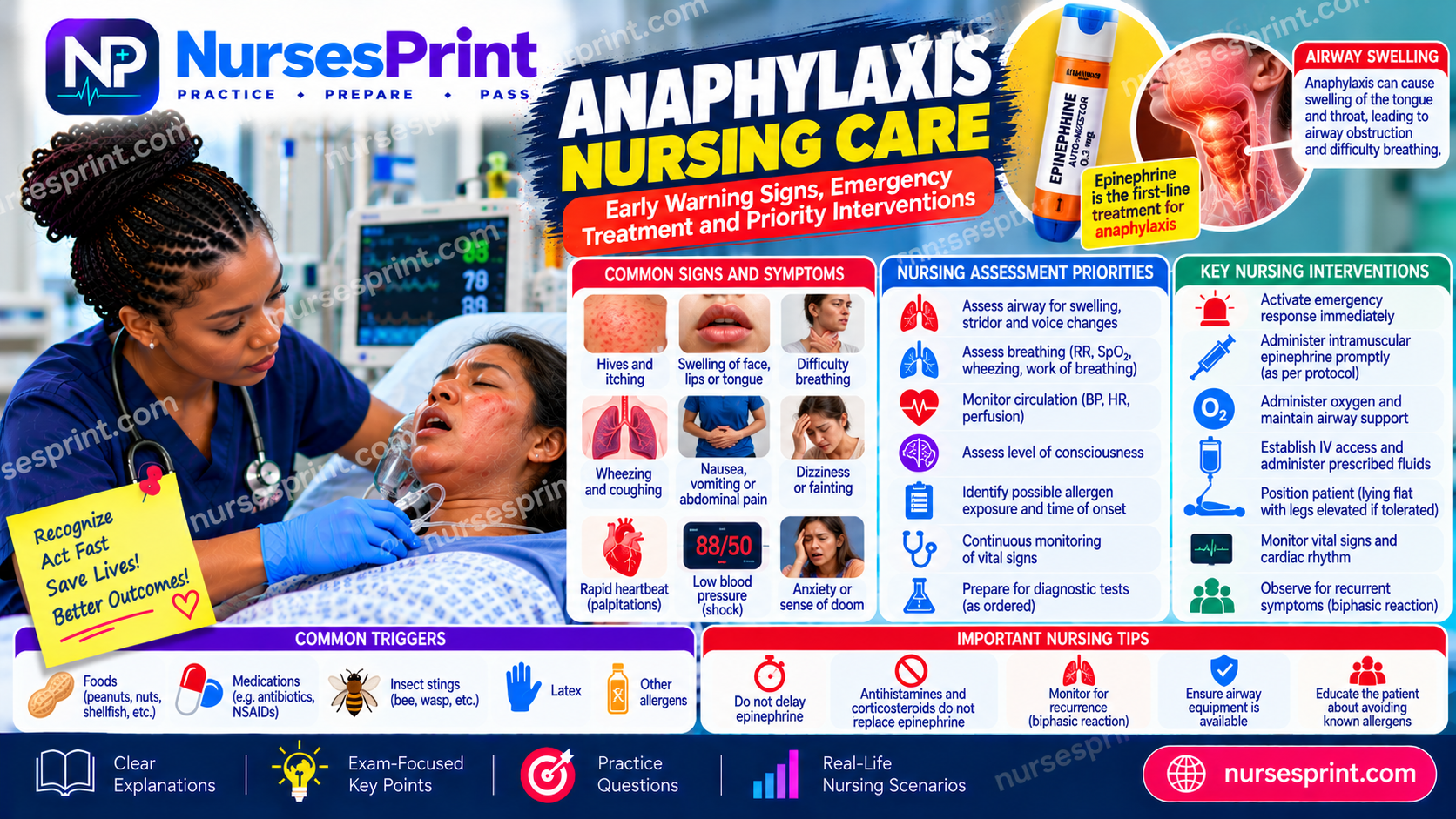
Anaphylaxis nursing care requires immediate recognition, rapid assessment and prompt emergency treatment. Anaphylaxis is a severe systemic hypersensitivity reaction that can develop rapidly after exposure to an allergen.
It may affect the respiratory, cardiovascular, gastrointestinal and skin systems. Without appropriate treatment, anaphylaxis can progress to airway obstruction, circulatory collapse and death.
Understanding anaphylaxis helps nurses respond confidently to emergencies while strengthening clinical judgment for nursing examinations.
What Causes Anaphylaxis?
Anaphylaxis occurs when the immune system triggers a severe reaction to a substance.
Common triggers include:
Foods such as peanuts, shellfish and tree nuts
Medications, including certain antibiotics
Insect stings
Latex exposure
Other substances that trigger severe hypersensitivity reactions
Some reactions occur without an identifiable trigger.
According to the American Academy of Allergy, Asthma & Immunology, anaphylaxis requires immediate treatment because symptoms can progress rapidly.
1. Recognize the Early Warning Signs of Anaphylaxis
Symptoms may develop within minutes of allergen exposure.
Common findings include:
Hives or widespread itching
Facial or lip swelling
Tongue or throat swelling
Wheezing or difficulty breathing
Persistent coughing
Hoarseness or voice changes
Dizziness or fainting
Rapid heartbeat
Low blood pressure
Severe abdominal discomfort or repeated vomiting
Importantly, anaphylaxis can occur without visible skin symptoms.
Nursing Tip: Sudden breathing difficulty or cardiovascular instability following exposure to a suspected allergen requires immediate emergency assessment.
2. Perform a Priority Nursing Assessment
When anaphylaxis is suspected, nurses should immediately evaluate airway, breathing and circulation.
Airway: Assess for tongue swelling, stridor, hoarseness and difficulty swallowing.
Breathing: Monitor respiratory rate, oxygen saturation, wheezing and work of breathing.
Circulation: Evaluate blood pressure, heart rate and peripheral perfusion.
Mental Status: Assess for confusion, dizziness or reduced consciousness.
Exposure History: Identify possible allergens and determine when symptoms began.
Clinical assessment should not delay emergency treatment.
3. Understand Why Epinephrine Is the First-Line Treatment
Intramuscular epinephrine is the first-line medication for anaphylaxis.
It helps reverse airway swelling, bronchoconstriction and cardiovascular instability.
Epinephrine should be administered promptly into the mid-outer thigh using an appropriate dose and device according to emergency protocols.
Antihistamines and corticosteroids must not replace epinephrine or delay its administration.
The CDC's clinical guidance on managing anaphylaxis provides information about emergency recognition and treatment.
Important: Delayed epinephrine administration is associated with an increased risk of severe outcomes.
4. Identify Priority Nursing Interventions
Emergency nursing care focuses on restoring airway function and supporting circulation.
Important interventions include:
Activate emergency assistance: Immediately initiate the appropriate emergency response.
Administer intramuscular epinephrine: Follow approved emergency protocols without unnecessary delay.
Position the patient safely: Generally keep the patient lying flat with legs elevated when tolerated. Adjust positioning for respiratory distress or pregnancy.
Support breathing: Administer oxygen when indicated and prepare for advanced airway management if necessary.
Establish intravenous access: Prepare for prescribed fluid resuscitation.
Monitor vital signs: Reassess blood pressure, heart rate, respiratory function and oxygen saturation.
Observe for recurrence: Continue monitoring because symptoms may return after initial improvement.
Patients experiencing cardiac arrest require immediate resuscitation according to established protocols.
5. Practice Anaphylaxis Nursing Examination Questions
Practice Question:
A patient develops wheezing, facial swelling and hypotension shortly after receiving an antibiotic. What is the priority nursing action?
A. Administer an oral antihistamine.
B. Wait for the symptoms to resolve.
C. Stop the suspected medication, activate emergency assistance and administer intramuscular epinephrine according to protocol.
D. Encourage the patient to walk.
Correct Answer: C
Rationale: These findings indicate suspected anaphylaxis. Immediate epinephrine administration and emergency response are essential to prevent respiratory and cardiovascular collapse.
Explore additional emergency nursing practice questions through NursesPrint to strengthen your clinical reasoning.
Frequently Asked Questions
What is the first-line treatment for anaphylaxis?
Intramuscular epinephrine is the first-line treatment and should be administered promptly.
Can anaphylaxis occur without hives?
Yes. Severe anaphylaxis may develop without obvious skin symptoms.
Why should patients be monitored after treatment?
Symptoms may recur after initial improvement, requiring further treatment and observation.
Conclusion
Anaphylaxis nursing care requires rapid recognition, immediate epinephrine administration and coordinated emergency intervention.
Nurses play a vital role in identifying airway compromise, monitoring circulation and supporting timely treatment.
Strengthen your emergency nursing knowledge: Visit NursesPrint for nursing examination preparation resources and clinical practice questions designed to build confidence.