Story
Acute Kidney Injury Nursing Care: Early Warning Signs, Assessment and Priority Interventions
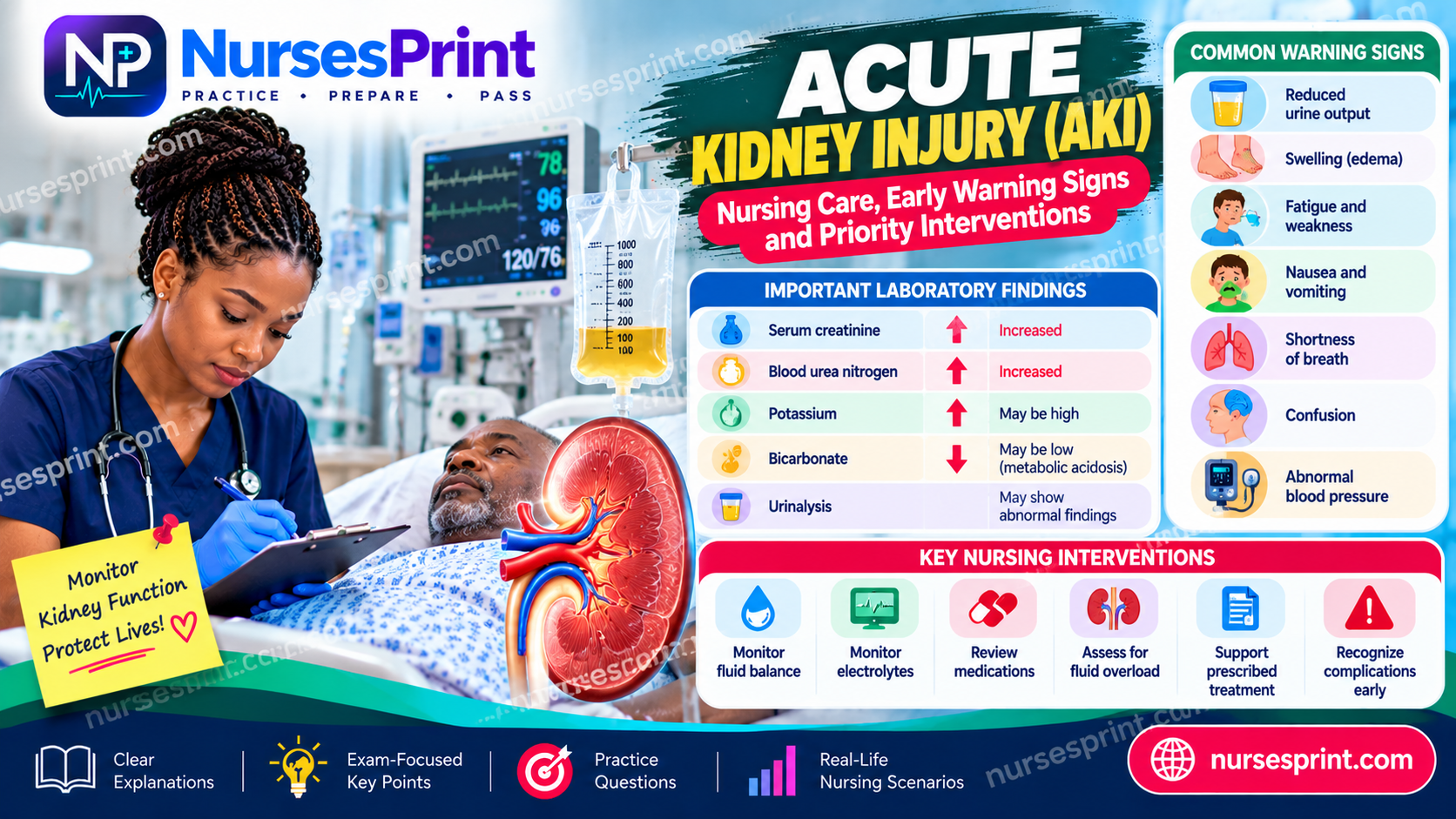
Acute kidney injury nursing care requires careful assessment, accurate fluid monitoring and early recognition of potentially dangerous complications. Acute kidney injury (AKI) occurs when kidney function declines suddenly, reducing the body's ability to remove waste products and maintain normal fluid and electrolyte balance.
Without appropriate management, AKI can cause serious complications such as hyperkalemia, fluid overload and metabolic disturbances.
Understanding AKI helps nursing students strengthen clinical judgment and prepare for medical-surgical nursing examinations.
What Is Acute Kidney Injury?
Acute kidney injury is a sudden reduction in kidney function that typically develops over hours or days.
AKI is commonly classified into three categories:
Prerenal AKI: Results from reduced blood flow to the kidneys, often caused by dehydration, blood loss or reduced cardiac output.
Intrinsic AKI: Occurs when kidney tissue is directly damaged by conditions such as acute tubular injury or certain medications.
Postrenal AKI: Develops when urinary obstruction prevents normal urine drainage.
According to the National Kidney Foundation, early identification and treatment of underlying causes are essential.
1. Recognize the Warning Signs of AKI
Patients with acute kidney injury may develop several clinical abnormalities.
Common findings include:
Reduced urine output
Swelling in the legs or other body areas
Unusual fatigue
Nausea or vomiting
Shortness of breath
Confusion or difficulty concentrating
Abnormal blood pressure
Some patients maintain normal urine output despite impaired kidney function.
Nursing Tip: Normal urine output does not completely exclude acute kidney injury. Laboratory findings and the patient's overall clinical condition must also be evaluated.
2. Understand Important AKI Laboratory Findings
Laboratory investigations help nurses identify kidney dysfunction and monitor complications.
Important tests include:
Laboratory Test | Clinical Significance |
|---|---|
Serum creatinine | Rising levels may indicate reduced kidney filtration |
Blood urea nitrogen | May increase when kidney function declines |
Serum potassium | Elevated levels can cause dangerous cardiac abnormalities |
Serum bicarbonate | Low levels may indicate metabolic acidosis |
Urinalysis | May help identify underlying kidney abnormalities |
AKI may be diagnosed when serum creatinine increases by at least 0.3 mg/dL within 48 hours or reaches at least 1.5 times baseline within seven days.
Reduced urine output can also meet diagnostic criteria.
3. Perform a Comprehensive Renal Nursing Assessment
Nurses should carefully assess hydration status, circulation and kidney function.
Important assessment priorities include:
Monitoring blood pressure and heart rate
Recording accurate fluid intake and output
Assessing urine volume and characteristics
Monitoring daily weight when indicated
Evaluating peripheral edema
Assessing respiratory status for fluid overload
Reviewing laboratory results and prescribed medications
Fluid balance is especially important because patients may experience either dehydration or excessive fluid accumulation.
The National Institute of Diabetes and Digestive and Kidney Diseases provides educational resources about kidney function and kidney-related conditions.
4. Identify Priority Nursing Interventions
AKI management depends on the underlying cause and severity.
Priority nursing interventions include:
Maintain Accurate Fluid Balance
Monitor intake, output and daily weight as prescribed.
Monitor Electrolytes
Identify dangerous potassium abnormalities and report critical findings promptly.
Review Medication Safety
Monitor prescribed medications and communicate concerns about potentially nephrotoxic drugs.
Assess for Fluid Overload
Watch for respiratory distress, crackles, edema and decreasing oxygen saturation.
Support Prescribed Treatment
Administer fluids, medications or other therapies according to the patient's clinical condition.
Recognize Emergency Complications
Severe hyperkalemia, pulmonary edema and significant metabolic disturbances require urgent intervention.
5. Practice Acute Kidney Injury Nursing Exam Questions
Practice Question:
A patient with acute kidney injury develops muscle weakness. Laboratory results show a serum potassium level of 6.8 mEq/L. What is the nurse's priority?
A. Encourage potassium-rich foods.
B. Continue routine monitoring.
C. Initiate urgent cardiac assessment and escalate care immediately.
D. Increase oral fluid intake without further assessment.
Correct Answer: C
Rationale: Severe hyperkalemia can cause life-threatening cardiac arrhythmias. Immediate cardiac assessment, ECG monitoring and urgent medical intervention are necessary.
Practicing clinical scenarios strengthens nursing prioritization skills.
Explore nursing examination preparation resources at NursesPrint to reinforce renal nursing concepts.
Frequently Asked Questions
What is the earliest sign of acute kidney injury?
A rise in serum creatinine or a reduction in urine output may indicate AKI. Some patients have no obvious early symptoms.
Why is potassium monitoring important in AKI?
Impaired kidney function can reduce potassium excretion, increasing the risk of dangerous cardiac arrhythmias.
Can acute kidney injury be reversed?
Kidney function may recover when the underlying cause is identified and treated promptly. Recovery depends on the severity of injury and the patient's overall health.
Conclusion
Acute kidney injury nursing care requires early recognition, comprehensive assessment and careful monitoring of fluid and electrolyte balance.
Nurses play a critical role in detecting complications, supporting treatment and preventing further kidney damage.
Understanding these principles strengthens clinical reasoning and prepares nursing students for examination questions involving renal emergencies.
Strengthen your renal nursing knowledge: Visit NursesPrint for nursing study resources and practice questions designed to support confident examination preparation.